Heat Pump Repair in Las Vegas: Common Problems Explained
Heat pump repair problems Las Vegas homeowners run into most often, why they happen in the desert, and what repairs cost in 2026.
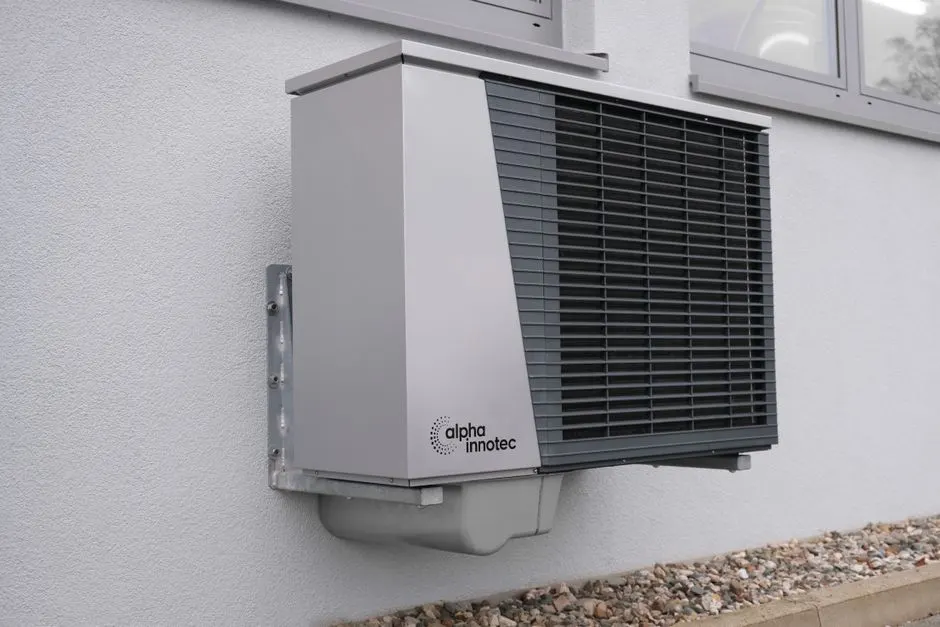
Heat pump repair problems in Las Vegas almost always trace back to one of six failures: a reversing valve stuck in one mode, a defrost cycle that never terminates, low refrigerant from a slow leak, a failed capacitor or contactor, a clogged outdoor coil packed with desert dust, or a thermostat wired for a single-stage system. The desert makes three of those worse than they are anywhere else in the country. Heat pump repair problems Las Vegas homeowners call us about are rarely exotic - they are predictable, and most of them show warning signs weeks before the system quits.
Below we break down why each failure happens here, what it looks like from inside your house, and what a repair runs in 2026.
Why Heat Pumps Struggle in the Las Vegas Valley
Heat pumps in the Las Vegas Valley run more annual hours than the same equipment in almost any other US climate, because they carry both the cooling load and the heating load in a place that swings from 112°F in July to 28°F on a January night. A unit that sees 2,000 cooling hours in Phoenix and 900 in Seattle may see 2,600 here between the two seasons.
Three local conditions do the damage:
- Dust. The valley averages roughly 4 to 6 inches of annual rainfall and sits downwind of open desert. Outdoor coils here load up with fine alkaline dust in 8 to 12 weeks, versus 6 months in wetter markets.
- Hard water and mineral scale. Condensate lines and drain pans scale up faster than most homeowners expect, which backs water into the air handler.
- Wide daily temperature swings. A 40-degree swing between afternoon and 4 a.m. forces the defrost board to cycle far more often than the same board would in a coastal climate.
That combination is why we treat heat pump service as a twice-a-year job here, not a once-a-year job. If you have been running a single annual visit, your outdoor coil is probably already restricting airflow. Our team handles AC Maintenance Las Vegas NV on a spring-and-fall schedule for exactly this reason.
What Are the Most Common Heat Pump Problems in Las Vegas?
Common heat pump problems in Las Vegas NV break down into mechanical failures, refrigerant issues, and control problems - and the mechanical ones dominate because of runtime hours. Here is what we actually replace, in rough order of frequency:
- Run and start capacitors. The single most common failure. A weak capacitor makes the compressor draw high amps and eventually trip the breaker.
- Contactor pitting. After 6 to 8 years of switching a 30- to 40-amp compressor load, the contacts burn and the unit short-cycles.
- Reversing valve failure. The valve that flips your system between heating and cooling. When it sticks, you get one mode only.
- Defrost board and sensors. Common on units older than 8 years.
- Refrigerant leaks at flare fittings and Schrader ports. Vibration plus 100°F-plus ambient temperatures work those joints loose.
- Blower motor and ECM module failures. Usually announced by a grinding noise or a blower that runs at one speed only.
None of these are brand-specific. We see the same six failures across every major manufacturer because the failure mode is driven by the climate, not the label on the cabinet.
Why Is My Heat Pump Not Heating in Las Vegas NV?
A heat pump not heating in Las Vegas Nevada in winter is usually a defrost failure, a reversing valve stuck in cooling, or auxiliary heat that never engaged - and the thermostat display tells you which one before we ever open the panel. Las Vegas heating season runs roughly late November through February, with overnight lows that drop into the high 20s in the northwest valley and near the airport. That is well inside the operating range of a modern heat pump, which means a unit that cannot keep up is broken, not outmatched.
What to check before you call:
- Is the outdoor fan running? If the fan spins but the air from your vents is cool, the reversing valve or the compressor is the suspect.
- Is the thermostat set to HEAT and showing AUX or EM HEAT? If auxiliary heat is carrying the whole load, your compressor is not running at all.
- Is the outdoor unit buried in frost at 2 p.m.? That is a defrost problem, covered below.
- Did the breaker trip? A tripped breaker on a heat pump points to a capacitor, contactor, or compressor issue - reset it once, and if it trips again, stop.
One thing worth knowing: heat pumps deliver air at roughly 95°F to 105°F at the register, not the 120°F a gas furnace delivers. If your system is running constantly but the house sits at 66°F, that is a capacity or refrigerant problem, not normal heat pump behavior. We handle these calls as Heating Repair Las Vegas NV and diagnose the mode issue on the first visit.
Heat Pump Not Cooling Las Vegas: What Changed?
A heat pump not cooling Las Vegas homeowners notice in June is almost always a refrigerant charge problem or a dirty outdoor coil - the two failures that quietly build through spring. Because the same equipment handles both seasons, a system that limped through a mild winter with a 10% refrigerant loss will fail outright the first week it hits 108°F.
Watch for these three signals:
- Supply air 15 to 20 degrees cooler than return air. Measure at the closest register and the return grille. Less than 15 degrees means the charge is off or the coil is restricted.
- Ice on the indoor coil or the large copper line. Low refrigerant causes the indoor coil to freeze, which then chokes airflow and makes the house warmer, not colder.
- Outdoor unit running but the fan blowing ambient air. The compressor is not engaging.
If your system is more than 12 years old and you are looking at a compressor or coil replacement, the math often favors replacement over repair. We walk through that decision honestly on every call, and our AC Replacement Las Vegas NV quotes include the line-set and disconnect work most contractors leave out.
Heat Pump Defrost Problems in Las Vegas
A heat pump defrost problem in Las Vegas shows up as a unit that ices over in heating mode and never clears - the board either is not initiating defrost or is not terminating it. In heating mode the outdoor coil runs colder than the outside air, so it collects frost. The defrost board reverses the cycle for 2 to 10 minutes to melt it off. When that cycle fails, ice builds until airflow stops and the compressor overheats.
Defrost failures here usually come from one of four parts:
- The defrost sensor (thermistor) reading the coil temperature wrong.
- The defrost control board itself, which is the most common replacement.
- A stuck reversing valve that cannot complete the switch.
- Low refrigerant, which drops coil pressure and temperature and makes the coil frost at outdoor temps where it should not.
You can spot a healthy defrost cycle by the steam rising off the outdoor unit on a cold morning - that is normal. Ice that survives past 15 minutes is not. If you are seeing that, shut the system off at the thermostat and call it in. Continuing to run a frosted heat pump is how a $400 board job turns into a $2,200 compressor job.
Heat Pump Not Switching Modes Las Vegas Nevada
A heat pump not switching modes Las Vegas Nevada is almost always a reversing valve, a thermostat configuration error, or a low-voltage wiring fault at the O/B terminal. The reversing valve is a brass body with a solenoid coil on top; when the solenoid fails, the valve defaults to one position and stays there. You will get heat in July or cold air in January, and no thermostat setting will change it.
Before we replace a valve, we rule out the cheap causes:
- Thermostat wiring. A heat pump needs the O/B terminal energized for the correct mode. A thermostat installed for a gas furnace will run the system in the wrong direction.
- Thermostat programming. Some installers leave the equipment type set to "gas furnace," which locks out the reversing logic.
- Solenoid coil. A $60 to $120 part that takes 20 minutes to swap.
An actual reversing valve replacement is a different job. It requires recovering the refrigerant, brazing in a new valve, pulling a vacuum, and recharging - typically 4 to 6 hours of labor. That is the point where we sit down with you and compare the repair against a new system, because on a 14-year-old unit the valve job is rarely the right money.
We see a lot of mode-switching and defrost calls in the older housing stock around AC Repair in Downtown Las Vegas, where a lot of systems were retrofitted from gas packs to heat pumps without upgrading the thermostat or the low-voltage wiring.
What Heat Pump Repairs Cost in Las Vegas in 2026
Heat pump repair in Las Vegas in 2026 runs from about $180 for a capacitor swap to $2,400 for a reversing valve or compressor replacement, with most single-visit repairs landing between $350 and $900. Here is what we see on real invoices this year:
- Diagnostic visit: $79 to $129, often credited toward the repair.
- Capacitor replacement: $180 to $320, parts and labor.
- Contactor replacement: $220 to $380.
- Defrost board replacement: $400 to $750.
- Blower motor replacement: $550 to $1,100.
- Refrigerant leak search and repair: $450 to $900, plus refrigerant at $45 to $90 per pound for R-410A and higher for R-454B systems.
- Reversing valve replacement: $1,400 to $2,400.
- Compressor replacement: $1,800 to $2,900, and usually the point where replacement makes more sense.
Two things move those numbers: system age and refrigerant type. If your unit was built after January 1, 2025, it likely uses R-454B, which is a mildly flammable A2L refrigerant. That changes the handling procedure and adds cost to any job that opens the sealed system. If your system predates 2010 and still runs R-22, refrigerant alone can run $150 to $250 a pound, and we will tell you straight that a leak repair on R-22 is usually throwing money at a system that needs to go.
Common Mistakes Las Vegas Homeowners Make With Heat Pumps
The mistakes we see most in Las Vegas are the ones that turn a $300 repair into a $2,500 one. None of them are dumb - they are just things nobody explains when the system is installed.
- Running the system with ice on the outdoor unit. You will destroy the compressor. Shut it off at the thermostat and call.
- Resetting the breaker repeatedly. A heat pump that trips a breaker has a real fault. Resetting it three times does not fix the fault; it welds the contactor.
- Setting the thermostat back 8 to 10 degrees overnight in winter. Heat pumps recover slowly. A big setback forces auxiliary heat to run for an hour at 4 a.m., which costs more than leaving it steady.
- Blocking the outdoor unit with landscaping or a shade screen. The unit needs 24 inches of clearance on all sides. Shade does not help a heat pump the way it helps a condenser.
- Skipping the fall tune-up. Defrost boards and reversing valves fail in heating mode. If nobody looks at the system in October, you find out in December.
- Hiring on price alone for a sealed-system repair. A cheap recharge with no leak search means you will pay for the same refrigerant again in 8 months.
One more: if your heat pump is paired with a gas furnace as a dual-fuel system, do not let anyone set the changeover point above 40°F. Done right, the heat pump should carry the load down to 35°F or lower, and the furnace should only take over below that.
When to Call a Professional
Call us when the system trips a breaker, when ice survives on the outdoor unit past 15 minutes, when you smell burning at the air handler, when the supply air is less than 15 degrees cooler than the return, or when the unit is stuck in one mode. Those five symptoms cover roughly 90% of the heat pump failures we see, and every one of them gets worse - and more expensive - the longer it runs.
Vegas Air Fix is a licensed Nevada HVAC contractor, and we diagnose heat pumps on the first visit rather than sending a salesman. We quote the repair price before we start, and if replacement is the better call, we will show you the numbers instead of pushing it. If you want a system that is actually ready for next summer, our AC Tune-Up Las Vegas NV includes a full heat-mode and defrost-cycle test, not just a coil rinse.
We also run 24 Hour AC Repair Las Vegas NV for no-heat and no-cool calls, because heat pumps here tend to fail on the hottest and coldest nights of the year.
Frequently Asked Questions
What are common heat pump problems in Las Vegas?
The six most common are failed capacitors and contactors, stuck reversing valves, defrost board and sensor failures, refrigerant leaks at flare fittings, blower motor failures, and thermostats configured for the wrong equipment type. Dust loading on the outdoor coil accelerates most of them.
Why is my heat pump not heating in Las Vegas NV?
Usually a defrost failure, a reversing valve stuck in cooling, or auxiliary heat that never engaged. Check whether the outdoor fan is running and whether the thermostat shows AUX heat. If the breaker tripped, reset it once - if it trips again, call us.
How much does heat pump repair cost in Las Vegas Nevada?
In 2026, most single-visit repairs run $350 to $900. A capacitor swap is $180 to $320, a defrost board is $400 to $750, and a reversing valve replacement is $1,400 to $2,400. Diagnostics run $79 to $129 and are usually credited toward the repair.
Can heat pumps work in Las Vegas heat?
Yes. A modern heat pump cools as well as a standard AC in 110°F-plus conditions, and it heats efficiently down to about 30°F. Las Vegas winter lows rarely drop below the high 20s, so a heat pump handles this climate comfortably when it is properly charged and maintained.
How often should a heat pump be serviced in Las Vegas?
Twice a year - once in spring before cooling season and once in fall before heating season. The desert dust load means a single annual visit leaves the outdoor coil restricted by the time August arrives, and defrost problems only surface in heating mode.
Get Help With AC Repair in Las Vegas
If your heat pump is icing over, stuck in one mode, or short-cycling, we can diagnose it today. Vegas Air Fix is a local Las Vegas AC company that works on heat pumps year-round, and we quote the repair before we touch a wrench.
Call 1234567890 to schedule a heat pump diagnostic.